U.S. flag

An official website of the United States government

Here’s how you know

Dot gov

Official websites use .gov
A .gov website belongs to an official government organization in the United States.

HTTPS

Secure .gov websites use HTTPS
A lock (LockA locked padlock) or https:// means you’ve safely connected to the .gov website. Share sensitive information only on official, secure websites.

Freedom 250 banner logo Join HHS in Celebrating Freedom 250
    • About HHS

      HHS is a U.S. executive department that touches the lives of nearly all Americans by protecting your rights, research, food safety, health care, aging, and much more.

      Explore About HHS
    • About the Department
      • Leadership
      • HHS Divisions
      • Organizational Chart
      • Priorities
      • Budget in Brief
      • Contact Us
    • Press Room
      • Press Releases
      • Request for Comment
      • Request for Interview
      • Connect on Social Media
      • HHS Live
      • Podcasts
    • Careers
      • Working at HHS
      • Opportunities for Attorneys
      • Join the Health Workforce
      • I am HHS
      • New Employee Orientation
      • Transportation Services
    • Standards and Compliance
      • Gold Standard Science
      • Accessibility
      • Plain Writing
      • Digital Communications Standards
      • Records Management
    • Accountability and Transparency
      • Freedom of Information Act (FOIA)
      • Open Government
      • No Fear Act
      • Privacy at HHS
  • RealFood.gov
  • MAHA
    • Programs & Services

      HHS is responsible for public health, health care, and human/social services for the United States of America. This includes administering over 100 programs and services.

      Explore Programs & Services
    • Health Care
      • Find a Health Center
      • Find an Indian Health Service Facility
      • Find Support for Mental Health, Drugs, or Alcohol
      • Find a Cancer Center
      • Dental Care Options
      • Telehealth
    • Health Insurance
      • Medicare – 65+ or With Disability
      • Medicaid - Low-Income, With Disability, or Pregnant
      • Children’s Health Insurance Programs (CHIP)
      • Find Health Insurance Coverage
      • Insurance Help for Mental Health and Substance Use
      • No Surprise Medicals Bills
    • Social Services
      • Programs for Children and Families
      • Programs for People with Disabilities
      • Programs for Older Adults
      • Resources for Caregivers
    • Public Health and Prevention
      • Emergency Preparedness and Response
      • Healthy Lifestyle
      • Mental Health and Substance Use
      • Food Safety and Nutrition
      • Drug and Product Safety
    • Health Research and Information
      • National Library of Medicine
      • Surgeon General Reports
      • Health Data
      • National Center for Health Statistics
      • Medline Plus
      • Clinical Research Studies
      • Volunteering to Participate in Research
    • Laws & Regulations

      HHS protects and helps you understand the laws and regulations, also known as "rules," that govern the nation. You also have the power to voice your opinion on these laws and regulations.

      Explore Laws & Regulations
    • Regulatory Information
      • What is a Rule?
      • Find Rules by Division
      • Comment on Open Rules
      • Suggest Deregulatory Actions
      • Understand Key Federal Laws
    • Civil Rights
      • Your Civil Rights
      • Civil Rights Laws Enforced by HHS
      • Health Information Privacy
      • Substance Use Disorder Patient Confidentiality
      • Conscience and Religious Freedom
    • Laws and Regulations by Topic
      • HIPAA Privacy Rule
      • Health Insurance Protections
      • Health IT Legislation
      • Food and Drug Safety
      • Public Health Emergencies
    • Human Research Protections
      • The Belmont Report
      • Regulations, Policy, and Guidance
      • Human Subjects Regulations (45 CFR 46)
      • Register IRBs and Obtain FWAs
      • Trainings, Tutorials, and Workshops
      • International Research
    • Complaints and Appeals
      • File a Medicare Complaint
      • File a HIPAA Complaint
      • File a Civil Rights Complaint
      • Appeal an Insurance Company Decision
      • Report Fraud, Waste, and Abuse to OIG
      • Report a Problem to the FDA
      • Report a Tip on the Chemical and Surgical Mutilation of Children
    • Grants & Contracts

      HHS gives the most money in grants of any federal agency in the U.S. Find out about our grants and how your organization can apply for them. We also provide information on how you can work with us and our support of small businesses.

      Explore Grants & Contracts
    • Grants
      • Get Ready for Grants Management
      • Grant Policies and Regulations
      • Research Grants and Funding from NIH
      • Search Grants.gov
      • Avoid Grant Scams
      • Contact HHS Grant Officials
    • Contracts
      • Get Ready to Do Business with HHS
      • Programs for Businesses
      • Contract Policies and Regulations
      • Search Opportunities on SAM.gov
      • Contact HHS Contracting Managers
    • Small Business
      • Contract Opportunities
      • Small Business Programs
      • Small Business Resources
      • Contact Small Business Staff
    • Radical Transparency

      HHS protects and helps you understand the laws and regulations, also known as "rules," that govern the nation. You also have the power to voice your opinion on these laws and regulations.

      Explore Radical Transparency
    • CDC’s ACIP Conflicts of Interest
    • Ending Anti-Semitism on College Campuses
    • Ending Wasteful Spending
    • Keeping Food Ingredients Safe
    • Chemical Contaminants Transparency Tool
Breadcrumb
  1. Home
  2. Programs
  3. Prevention & Wellness
  4. Mental Health & Substance Use Disord…
  5. 2024 National Strategy for Suicide Prevention
  • HIPAA & Your Health Rights
    • Regulatory Initiatives
  • Health Insurance
    • Medicaid/CHIP Renewal and Transition Resources for Partners
    • Mental Health and Substance Use Insurance Help
  • Social Services
    • Children and Family Services
    • Programs for People with Disabilities
    • Unaccompanied Children
  • Prevention & Wellness
    • Healthy Lifestyle
    • Health Screenings
    • Vaccines & Immunizations
    • Mental Health & Substance Use Disorder
      • National Strategy for Suicide Prevention
    • The Environment & Your Health
  • Providers & Facilities
    • Health Care Facilities
    • Resources for Caregivers
  • Public Health & Safety
    • Safety from Violence & Abuse
    • H5N1 Research Priorities
    • Monkeypox Response
  • Emergency Preparedness & Response
  • Research
    • HHS Scientific Integrity
    • Report a Potential Loss of Scientific Integrity at HHS
    • Research at HHS Operating Divisions
  • Featured Topic Sites
  • Education & Training Opportunities

2024 National Strategy for Suicide Prevention

Suicide is an urgent and growing public health crisis. More than 49,000 people in the United States died by suicide in 2022. That’s one death every 11 minutes.

National Strategy for Suicide Prevention

The 2024 National Strategy for Suicide Prevention is a bold new 10-year, comprehensive, whole-of-society approach to suicide prevention that provides concrete recommendations for addressing gaps in the suicide prevention field. This coordinated and comprehensive approach to suicide prevention at the national, state, tribal, local, and territorial levels relies upon critical partnerships across the public and private sectors. People with lived experience are critical to the success of this work. 

 The National Strategy seeks to prevent suicide risk in the first place; identify and support people with increased risk through treatment and crisis intervention; prevent reattempts; promote long-term recovery; and support survivors of suicide loss. 

Four strategic directions guide the National Strategy:
2024 National Strategy for Suicide Prevention Cover
Download the Strategy

Goal 1: Establish effective, broad-based, collaborative, and sustainable suicide prevention partnerships.

Goal 2: Support upstream comprehensive community-based suicide prevention.

Goal 3: Reduce access to lethal means among people at risk of suicide.

Goal 4: Conduct postvention and support people with suicide-centered lived experience.

Goal 5: Integrate suicide prevention into the culture of the workplace and into other community settings.

Goal 6: Build and sustain suicide prevention infrastructure at the state, tribal, local, and territorial levels.

Goal 7: Implement research-informed suicide prevention communication activities in diverse populations using best practices from communication science.

Goal 8: Implement effective suicide prevention services as a core component of health care.

Goal 9: Improve the quality and accessibility of crisis care services across all communities.

Goal 10: Improve the quality, timeliness, scope, usefulness, and accessibility of data needed for suicide-related surveillance, research, evaluation, and quality improvement.

Goal 11: Promote and support research on suicide prevention.

Goal 12: Embed health equity into all comprehensive suicide prevention activities.

Goal 13: Implement comprehensive suicide prevention strategies for populations disproportionately affected by suicide, with a focus on historically marginalized communities, persons with suicide-centered lived experience, and youth.

Goal 14: Create an equitable and diverse suicide prevention workforce that is equipped and supported to address the needs of the communities they serve.

Goal 15: Improve and expand effective suicide prevention programs for populations disproportionately impacted by suicide across the life span through improved data, research, and evaluation.

Federal Action Plan

The Federal Action Plan identifies more than 200 actions across the federal government to be taken over the next three years in support of those goals. These actions include:

  • Evaluating promising community-based suicide prevention strategies
  • Identifying ways to address substance use/overdose and suicide risk together in the clinical setting
  • Funding a mobile crisis locator for use by 988 crisis centers
  • Increasing support for survivors of suicide loss and others whose lives have been impacted by suicide

These actions will be monitored and evaluated regularly to determine progress and success, and to further identify barriers to suicide prevention.
2024 National Strategy for Suicide Prevention Federal Action Plan Cover
Download the Plan

Get Involved

Join the conversation. Everyone has a role to play in preventing the tragedy of suicide. Find social media material, templates, and other resources to support and participate in the shared effort.
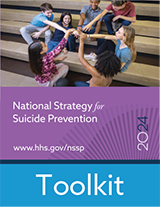
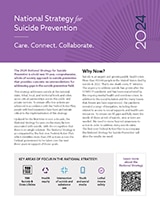
thumbnail image of 2024 National Strategy for Suicide Prevention toolkit.
Download the Toolkit
Thumbnail image of the 2024 National Strategy for Suicide Prevention factsheet
Download the Fact Sheet
Biden-Harris Administration Releases National Strategy for Suicide Prevention and First-Ever Federal Action Plan
Read the press release

Care. Connect. Collaborate.

Watch a version of this video with audio description

Additional Resources

National Action Alliance for Suicide Prevention

Content last reviewed March 31, 2025
Back to top
Secretary Robert F. Kennedy Jr.

Follow @SecKennedy

HHS icon

Follow @HHSGov

HHS Email updates

Receive email updates from HHS.

Subscribe

HHS Logo

HHS Headquarters

200 Independence Avenue, S.W.
Washington, D.C. 20201
Toll Free Call Center: 1-877-696-6775​

  • Contact HHS
  • Careers
  • HHS FAQs
  • Nondiscrimination Notice
  • Press Room
  • HHS Archive
  • Accessibility Statement
  • Budget/Performance
  • Inspector General
  • Web Site Disclaimers
  • EEO/No Fear Act
  • FOIA
  • The White House
  • USA.gov
  • Vulnerability Disclosure Policy