
U.S. flag

An official website of the United States government

Here’s how you know

Dot gov

Official websites use .gov
A .gov website belongs to an official government organization in the United States.

HTTPS

Secure .gov websites use HTTPS
A lock (LockA locked padlock) or https:// means you’ve safely connected to the .gov website. Share sensitive information only on official, secure websites.

Freedom 250 banner logo Join HHS in Celebrating Freedom 250
    • About HHS

      HHS is a U.S. executive department that touches the lives of nearly all Americans by protecting your rights, research, food safety, health care, aging, and much more.

      Explore About HHS
    • About the Department
      • Leadership
      • HHS Divisions
      • Organizational Chart
      • Priorities
      • Budget in Brief
      • Contact Us
    • Press Room
      • Press Releases
      • Request for Comment
      • Request for Interview
      • Connect on Social Media
      • HHS Live
      • Podcasts
    • Careers
      • Working at HHS
      • Opportunities for Attorneys
      • Join the Health Workforce
      • I am HHS
      • New Employee Orientation
      • Transportation Services
    • Standards and Compliance
      • Gold Standard Science
      • Accessibility
      • Plain Writing
      • Digital Communications Standards
      • Records Management
    • Accountability and Transparency
      • Freedom of Information Act (FOIA)
      • Open Government
      • No Fear Act
      • Privacy at HHS
  • RealFood.gov
  • MAHA
    • Programs & Services

      HHS is responsible for public health, health care, and human/social services for the United States of America. This includes administering over 100 programs and services.

      Explore Programs & Services
    • Health Care
      • Find a Health Center
      • Find an Indian Health Service Facility
      • Find Support for Mental Health, Drugs, or Alcohol
      • Find a Cancer Center
      • Dental Care Options
      • Telehealth
    • Health Insurance
      • Medicare – 65+ or With Disability
      • Medicaid - Low-Income, With Disability, or Pregnant
      • Children’s Health Insurance Programs (CHIP)
      • Find Health Insurance Coverage
      • Insurance Help for Mental Health and Substance Use
      • No Surprise Medicals Bills
    • Social Services
      • Programs for Children and Families
      • Programs for People with Disabilities
      • Programs for Older Adults
      • Resources for Caregivers
    • Public Health and Prevention
      • Emergency Preparedness and Response
      • Healthy Lifestyle
      • Mental Health and Substance Use
      • Food Safety and Nutrition
      • Drug and Product Safety
    • Health Research and Information
      • National Library of Medicine
      • Surgeon General Reports
      • Health Data
      • National Center for Health Statistics
      • Medline Plus
      • Clinical Research Studies
      • Volunteering to Participate in Research
    • Laws & Regulations

      HHS protects and helps you understand the laws and regulations, also known as "rules," that govern the nation. You also have the power to voice your opinion on these laws and regulations.

      Explore Laws & Regulations
    • Regulatory Information
      • What is a Rule?
      • Find Rules by Division
      • Comment on Open Rules
      • Suggest Deregulatory Actions
      • Understand Key Federal Laws
    • Civil Rights
      • Your Civil Rights
      • Civil Rights Laws Enforced by HHS
      • Health Information Privacy
      • Substance Use Disorder Patient Confidentiality
      • Conscience and Religious Freedom
    • Laws and Regulations by Topic
      • HIPAA Privacy Rule
      • Health Insurance Protections
      • Health IT Legislation
      • Food and Drug Safety
      • Public Health Emergencies
    • Human Research Protections
      • The Belmont Report
      • Regulations, Policy, and Guidance
      • Human Subjects Regulations (45 CFR 46)
      • Register IRBs and Obtain FWAs
      • Trainings, Tutorials, and Workshops
      • International Research
    • Complaints and Appeals
      • File a Medicare Complaint
      • File a HIPAA Complaint
      • File a Civil Rights Complaint
      • Appeal an Insurance Company Decision
      • Report Fraud, Waste, and Abuse to OIG
      • Report a Problem to the FDA
      • Report a Tip on the Chemical and Surgical Mutilation of Children
    • Grants & Contracts

      HHS gives the most money in grants of any federal agency in the U.S. Find out about our grants and how your organization can apply for them. We also provide information on how you can work with us and our support of small businesses.

      Explore Grants & Contracts
    • Grants
      • Get Ready for Grants Management
      • Grant Policies and Regulations
      • Research Grants and Funding from NIH
      • Search Grants.gov
      • Avoid Grant Scams
      • Contact HHS Grant Officials
    • Contracts
      • Get Ready to Do Business with HHS
      • Programs for Businesses
      • Contract Policies and Regulations
      • Search Opportunities on SAM.gov
      • Contact HHS Contracting Managers
    • Small Business
      • Contract Opportunities
      • Small Business Programs
      • Small Business Resources
      • Contact Small Business Staff
    • Radical Transparency

      HHS protects and helps you understand the laws and regulations, also known as "rules," that govern the nation. You also have the power to voice your opinion on these laws and regulations.

      Explore Radical Transparency
    • CDC’s ACIP Conflicts of Interest
    • Ending Anti-Semitism on College Campuses
    • Ending Wasteful Spending
    • Keeping Food Ingredients Safe
    • Chemical Contaminants Transparency Tool
Breadcrumb
  1. Home
  2. Programs
  3. Featured Topic Sites
  4. Sexually Transmitted Infections
  5. STI National Strategic Plan Overview
  • Sexually Transmitted Infections (STIs)
    • STI National Strategic Plan Overview
      • Developing the Plan
      • STI Plan: Vision and Goals
      • Priority Populations
      • STI Federal Implementation
      • Monitoring Progress
      • HSV Addendum
      • Toolkit
    • Guidelines and Best Practices
    • Resources
    • Announcements

STI National Strategic Plan Overview

What Is the STI National Strategic Plan?
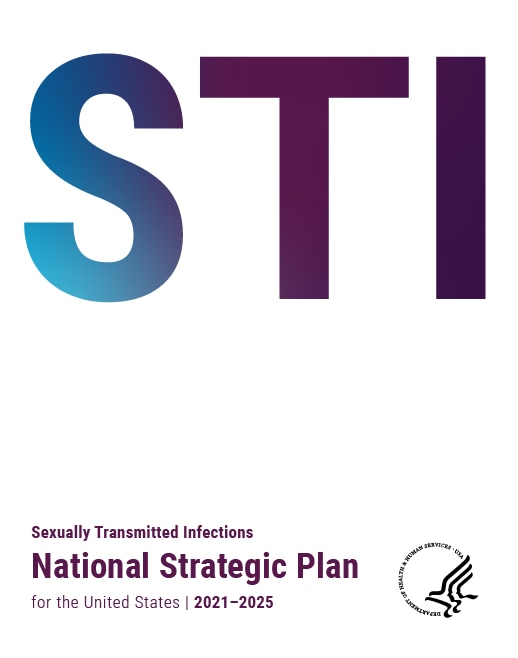
STI Plan Cover

The Sexually Transmitted Infections National Strategic Plan (STI Plan) (1.8 MB) is a groundbreaking, first-ever, five-year plan that

aims to reverse the recent dramatic rise in STIs in the United States. The STI Plan sets a vision as well as goals, objectives, and strategies to respond to this STI epidemic. It also includes indicators with measurable targets to track progress.

The STI Plan aims to provide a roadmap for a broad range of stakeholders—including public health, health care, government, community-based organizations, educational institutions, researchers, private industry, and academia—to develop, enhance and expand STI prevention and care programs at the local, state, tribal and national levels over the next five years.

Why do we need an STI National Strategic Plan?

The STI epidemic affects the health of people and communities and is costly to the health care system. When left untreated, STIs can lead to long term health problems such as chronic pelvic pain, infertility, and poor birth outcomes including death of newborns. STIs can also increase the risk of getting HIV and giving HIV to others. Additionally, human papillomavirus (HPV) infection causes about 35,000 cases of cancer each year, even though there is a safe and highly effective vaccine that prevents the cancer-causing strains of HPV. STIs affect the quality of life for millions of Americans and cost the health care system billions of dollars annually.

STI rates have risen dramatically. From 2014–2018, the rates of reported cases of primary and secondary syphilis, congenital syphilis, gonorrhea, and chlamydia rose 71%, 185%, 63%, and 19%, respectively. HPV, the most common STI, accounts for 14 million new infections each year.

The impact of the STI epidemic does not fall equally across all populations and regions. Adolescents and young adults, men who have sex with men, and pregnant women are more impacted by STIs. Social determinants of health contribute to an unequal burden of STIs in Black, American Indian/Alaska Native and Hispanic communities. In addition, people living in the Southern and Western regions of the U.S. are disproportionately affected.

Learn more about the STI epidemic in the United States.

STI National Strategic Plan

Vision

The United States will be a place where sexually transmitted infections are prevented and where every person has high-quality STI prevention, care, and treatment while living free from stigma and discrimination.

This vision includes all people, regardless of age, sexual orientation, race, ethnicity, religion, disability, geographic location, or socioeconomic circumstance.

Scope

The Plan’s goals, objectives, and strategies apply equally to most STIs, although it highlights four of the STIs that have the greatest impact on the health of the nation: chlamydia, gonorrhea, syphilis, and HPV. It also identifies populations and geographic regions that experience the highest burden of STIs based on nationwide data so that federal agencies and other stakeholders can focus their resources to have the greatest impact. Stakeholders are encouraged to use the data for the jurisdiction or population(s) they serve to identify where their resources may have the greatest impact.

Learn more about common STIs.

Priority Populations

The STI Plan is designed to meet the prevention and treatment needs of everyone in the United States—but the plan recognizes that some groups of people and some communities and regions are more impacted by STIs than others. These specific groups are called “priority populations.” Based on national level data, they are:

  • Adolescents and young adults
  • Men who have sex with men (MSM)
  • Pregnant women

Within these populations, the plan also notes that certain racial and ethnic minority communities (Black, American Indian/Alaska Native, and Hispanic) and geographic regions (Southern and Western regions of the United States) are more impacted by STIs than others.

Learn more about the priority populations.

Other Key Elements of the STI Plan

The STI Plan strongly emphasizes the need to address stigma, discrimination, and social determinants of health in order to reverse the rise in STI rates. Another theme interwoven in the STI Plan is the need to integrate STI prevention and control into other public health efforts to prevent and treat HIV, viral hepatitis, and substance use disorders.

The plan notes that we can improve and sustain people’s health and reduce health inequities by working to establish policies and programs that improve the conditions in which we live, learn, work, and play. These actions will ultimately create a healthier population and society.

Progress Indicators

The STI Plan identifies indicator measures and sets targets for each indicator. These will be used to track progress toward achieving the plan’s goals. There are seven core indicators to measure progress for the entire plan. Some core indicators are also used to measure progress in addressing disparities in STIs among the priority populations and subpopulations (i.e., disparities indicators). The STI Plan also offers recommendations for developing additional indicators to improve our nation’s ability to measure progress in reducing STIs.

For each core and disparities indicator, the STI Plan begins with a baseline measurement and establishes annual quantitative targets through 2030 because STIs will continue to pose a threat to the public’s health past 2025. The indicators use existing national data sources that:

  • Generate data regularly and consistently, making it possible to do nationwide, cross-year comparisons; and
  • Allow for breaking down the information by age, geographic region, race, ethnicity, and sex, and, when available, sex of sex partners.

Learn more about the Indicators.

Next steps: Federal STI Implementation Plan

Federal partners will collaborate to develop an implementation plan that supports the STI Plan’s goals and suggested action steps. This Federal Implementation Plan will spell out federal partners’ specific commitments to developing policies, initiatives, and activities to meet the goals of the STI Plan. HHS will publish this implementation plan to ensure transparency and accountability.

As part of their ongoing commitment to reduce STIs in the U.S., federal partners have committed to serve on an STI Plan implementation working group. This group will meet regularly to coordinate activities across agencies and Departments, monitor progress toward the indicator targets, implement lessons learned from data and research findings, change course when necessary, and report on national progress.

Additional Resources

  • National Strategic Plan 2021–2023 Progress Report: Sexually Transmitted Infections National Strategic Plan for the United States, 2021–2025
  • Download the STI Plan to read it.
  • Learn about the development of the STI Plan.
  • Find resources in our promotional toolkit.
Content last reviewed February 3, 2025
Back to top
Secretary Robert F. Kennedy Jr.

Follow @SecKennedy

HHS icon

Follow @HHSGov

HHS Email updates

Receive email updates from HHS.

Subscribe

HHS Logo

HHS Headquarters

200 Independence Avenue, S.W.
Washington, D.C. 20201
Toll Free Call Center: 1-877-696-6775​

  • Contact HHS
  • Careers
  • HHS FAQs
  • Nondiscrimination Notice
  • Press Room
  • HHS Archive
  • Accessibility Statement
  • Budget/Performance
  • Inspector General
  • Web Site Disclaimers
  • EEO/No Fear Act
  • FOIA
  • The White House
  • USA.gov
  • Vulnerability Disclosure Policy