





Diet-related chronic diseases are now responsible for nearly 60 percent of U.S. deaths, and an estimated one million Americans die from diet-related chronic diseases each year. Despite overwhelming evidence that nutrition is one of the most powerful tools for disease prevention, the vast majority of physicians say they feel unprepared to discuss nutrition with their patients. The Advancing Nutrition Education Across the Medical Continuum initiative highlights America’s leading medical education institutions that are implementing comprehensive nutrition education and training.
By the numbers
36
Number of states with Schools or Universities committed to advancing nutrition education
80
Number of institutions of higher education committed to advancing nutrition education
52,000+
Number of medical students receiving enhanced nutrition education
Historic Commitments Across the Nation
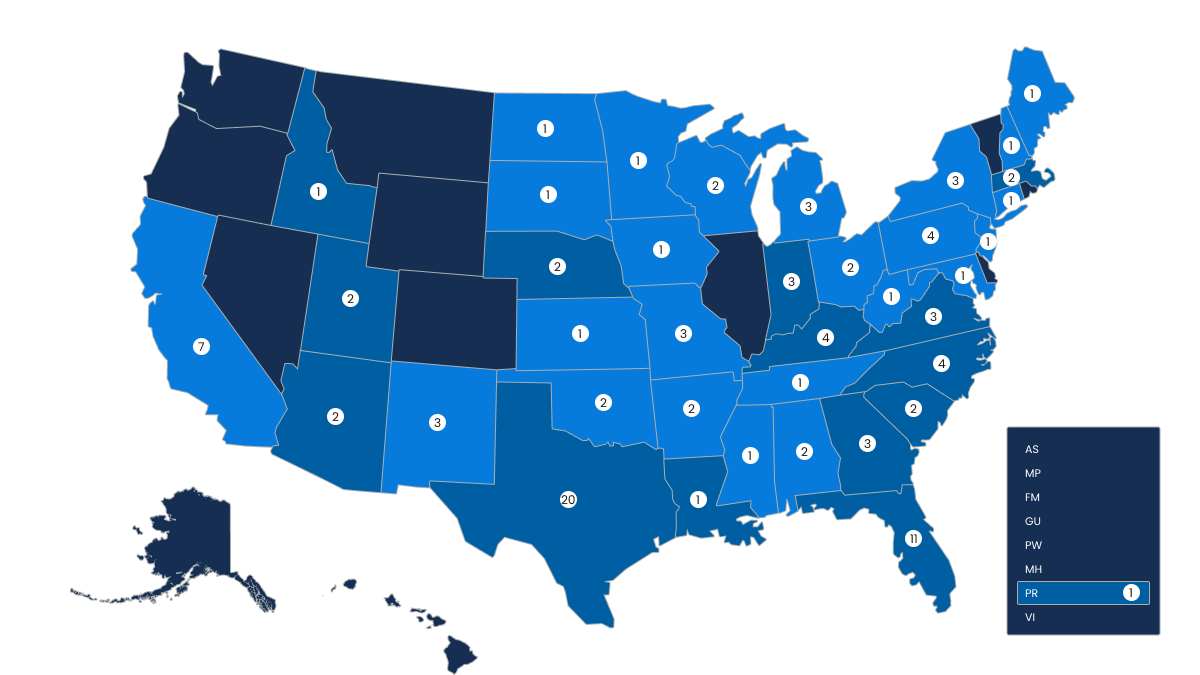
The map below shows the institutions of higher education committed to advancing nutrition education across the United States.
Committed Organizations
HHS has received commitments from both medical schools and accrediting organizations to help advance nutrition education and training in medical education. Explore the organizations that have committed to this effort and learn more about their approaches below.
Committed Schools
Secretary Kennedy encouraged schools to commit to a minimum of 40 hours of required nutrition education across all four years of undergraduate medical education or a minimum 40-hour competency equivalent beginning in Fall 2026. To help schools in meeting this commitment, HHS developed a voluntary competency framework.
If your University is interested in learning more, please reach out to partnerwithus@hhs.gov.
The list below reflects the institutions of higher education committed to equipping medical students with enhanced nutrition education. Learn more about each school’s individual approach below.

Louisiana
Louisiana State University (LSU) Health New Orleans
LSU-New Orleans is developing a comprehensive nutrition curriculum so future doctors recognize the role of diet in health and disease development.

Louisiana
Louisiana State University (LSU) Health Shreveport
LSU-Shreveport's longitudinal, competency-based curriculum integrates nutrition across all phases, preparing graduates for evidence-based care.

Maryland
Meritus School of Osteopathic Medicine (MSOM)
Rooted in community: training future physicians to integrate nutrition into clinical care through education, service, and outreach.

New York
New York University (NYU) Grossman Long Island School of Medicine
NYU Grossman Long Island School of Medicine's curriculum includes multifaced aspects of nutrition education, preparing graduates to comprehensively meet future patient's needs.

New York
New York University (NYU) Grossman School of Medicine
NYU Grossman School of Medicine provides nutrition education from assessment to counseling, preparing graduates to deliver effective, patient-centered care.

Utah
Noorda College of Osteopathic Medicine
Noorda trains physicians to apply nutrition for personal health and guide patients using a whole-person, osteopathic approach to care.

Michigan
Oakland University William Beaumont School of Medicine
Oakland University William Beaumont School of Medicine integrates nutrition across all four years, addressing 30 defined competencies.

Florida
Orlando College of Osteopathic Medicine (OCOM)
OCOM trains students to apply nutrition science in patient care, supporting prevention, treatment, and long-term wellness.

Pennsylvania
Philadelphia College of Osteopathic Medicine (PCOM)
Central to PCOM's osteopathic mission, our 4-year curriculum integrates lifespan dietary requirements and counseling to promote whole-person wellness.
Committed Accreditors
The organizations below include accreditors, assessors, and standards development organizations that have made commitments to further support nutrition across the medical education continuum.
- Vertical integration: aligning pre-clinical and clinical nutrition instruction across osteopathic programs
- Scaling proven models: culinary medicine programs, interdisciplinary workshops, community outreach
- Faculty development: expanding educator competency in nutrition and lifestyle counseling
- Seed research funding: food-as-medicine integration; nutrition programming and competition at Educating Leaders 202
- Position statement (Fall 2025): affirming responsibility of academic medicine to address nutrition in chronic disease context
- Integration at AAMC meetings: beginning fall 2025 across relevant educational convenings
- First-ever educator convening (April 2026): 'Best Practices in Medical Nutrition Education' at AAMC headquarters
- Assess and identify the most important nutrition content in initial and continuing certification programs and share those content domains with CME providers.
- Design and implement a practice-based QI activity for diplomates to increase nutritional counseling and interventions in their practices.
- Implement a Lifestyle Medicine focused practice designation that recognizes expertise in nutrition and five other domains.
- Public podcast (2026): Committed to Nutrition and Preventive Medicine
- Public catalog and web compilation (2025+): Curate and publish an aligned, accessible set of nutrition and preventive health learning activities for accredited providers
- Public reports (2026+): Summarize scope & quantity of nutrition-related CME activities to identify and fill gaps
- Specialty requirements by end of 2026: template for nutritional requirements for patient-facing specialties; accelerate adoption outside of usual Requirements revision cycle for effective date of academic year 2027
- New nutrition Milestones (2026): nutrition Milestones and Supplemental Guide content developed for use of direct care specialties
- Essay contest (2026): resident/fellow reflection on motivating patients toward healthy diet; winning essays disseminated nationally
- Counseling toolkit (goal: end of 2027): current guidelines, diet/lifestyle apps, patient motivation resources for residents & fellows
- 10+ hours of elective online education: modules, role-play scenarios, OSCEs, M&M; conference integration, clinical simulation resources available for use of programs
- Annual Educational Conference (2026-ongoing): feature annual sessions on nutrition at world’s largest GME conference
- Element 6.12 (already published): COMs must integrate evidence-based nutrition across pre-clinical & clinical curricula
- Submission requirements: 250-word integration description + curriculum map required
- New Element 7.3 added: 'Curriculum includes nutrition content for preventing & managing chronic disease'
- Compliance monitoring: enhanced data collection begins Spring 2026; full enforcement July 2027 (AY 2027-28)
- 15% Nutrition Content Across All USMLE Steps: Ensure nutrition science comprises 15% of content across all three USMLE Steps, aligned with evidence-based guidelines with individual and institutional score report feedback to drive accountability. Enhancements to nutrition content coming June 2026.
- Highlight Nutrition as a Core Content Area: Prominently highlight nutrition on all USMLE communications and materials, ensuring it is recognized as a priority content domain for examinees and medical schools alike.
- Sustained Quality via Expert-Guided Question Writing: Leverage content management practices with expert input to monitor, write, and review nutrition test questions, maintaining 15% coverage with evidence-based relevance and rigor across all Steps on an ongoing basis.
- Enhanced competency domain framework (FOMCD 2026): increased emphasis on nutrition aligned with whole-person osteopathic tenets and other competency frameworks
- COMLEX-USA blueprint (2027): enhanced to align with FOMCD 2026 and construct new test content based on new measurable outcomes
- C3DO enhancement: national clinical skills exam to incorporate nutritional/lifestyle counseling in patient cases
- COMAT-Nutrition in Patient Care: development underway; release targeted for 2027 (funding support requested for examinees)